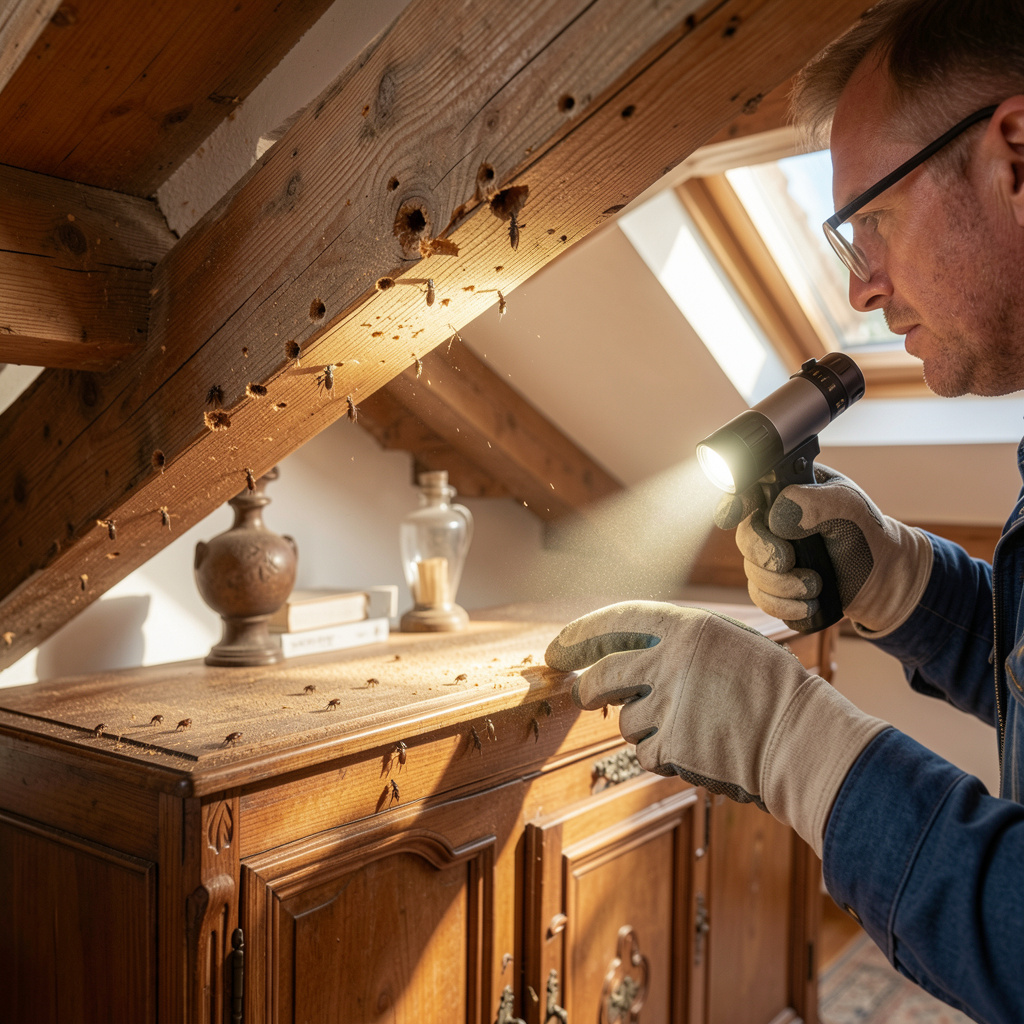
Your roof is one of the most important structural components of your home, and the timber that supports it is designed to last for decades. However, hidden pests such as woodworm can quietly damage roof timbers long before the problem becomes obvious. Because woodworm larvae live and feed inside the wood, homeowners often discover an infestation only after significant damage has already occurred.
The good news is that woodworm rarely causes sudden structural failure. In most cases, the infestation develops slowly over several years, providing plenty of opportunities to detect the problem early. Knowing the warning signs can help you protect your roof structure, avoid expensive repairs, and preserve the long-term integrity of your home.
In this guide, you’ll learn how to recognize the early signs of woodworm in roof timbers, understand what causes infestations, and discover the best ways to prevent further damage.
What Is Woodworm?
Despite its name, woodworm is not actually a worm. The term refers to the larvae of several species of wood-boring beetles, including:
- Common Furniture Beetle (Anobium punctatum)
- Deathwatch Beetle (Xestobium rufovillosum)
- House Longhorn Beetle (Hylotrupes bajulus)
- Powderpost Beetles (Lyctus species)
Adult beetles lay eggs on wooden surfaces, usually in cracks, crevices, or old exit holes. After hatching, the larvae tunnel deep into the timber, feeding on the wood for two to five years, and sometimes much longer depending on the species.
Most of the damage occurs during this hidden larval stage.
Why Roof Timbers Are Vulnerable
Roof spaces often provide ideal conditions for woodworm because they are:
- Quiet and rarely disturbed
- Poorly ventilated
- Warm during certain times of the year
- Occasionally affected by roof leaks or condensation
- Filled with untreated or older timber
If moisture is present, roof timbers become even more attractive to wood-boring beetles looking for suitable places to lay their eggs.
1. Small Round Exit Holes
One of the earliest visible signs of woodworm is the appearance of small round exit holes.
These holes are created when adult beetles emerge after completing their development inside the timber.
Fresh exit holes usually:
- Measure between 1 mm and 3 mm in diameter
- Have clean, sharp edges
- Appear lighter in color than the surrounding wood
Older holes may become darker over time as dust and dirt accumulate.
2. Fine Powdery Frass
Another important warning sign is frass, the fine powder produced by woodworm larvae as they feed.
Fresh frass typically:
- Looks like very fine sawdust
- Is cream or light brown in color
- Collects beneath beams or around exit holes
- Reappears after cleaning if the infestation is active
Fresh frass is one of the strongest indicators that woodworm is still present.
3. Soft or Weak Timber
Woodworm larvae tunnel through the inside of roof beams, gradually weakening the wood.
Warning signs include:
- Soft spots
- Crumbling edges
- Timber that feels unusually light
- Wood that can be easily pierced with gentle pressure
The outside of a beam may appear sound while the inside has been extensively tunneled.
4. Hollow-Sounding Beams
Lightly tapping a beam can sometimes reveal hidden damage.
Healthy timber usually produces a solid sound, while severely tunneled wood may sound hollow.
Although this is not a definitive test, a hollow sound combined with other symptoms warrants further investigation.
5. Live Adult Beetles
Adult beetles usually emerge during late spring and summer.
Finding small brown beetles in your loft or near roof timbers may indicate an active infestation.
Most adult wood-boring beetles are:
- Brown
- Oval-shaped
- Between 2 mm and 7 mm long, depending on the species
Because adults live only a few weeks, they are often overlooked.
6. Fresh Exit Holes Appearing Each Year
Old exit holes do not necessarily indicate an active infestation.
However, if you notice new holes appearing during each spring or summer, adult beetles are continuing to emerge from the timber.
Marking existing holes during inspections can help identify new activity.
7. Sagging or Distorted Timber
Although uncommon in early infestations, prolonged woodworm activity combined with moisture damage can eventually weaken roof structures.
Look for:
- Slight sagging
- Twisted beams
- Unusual movement
- Cracks that continue to grow
These signs should always be evaluated by a qualified professional.
8. Moisture Problems in the Loft
Woodworm is strongly associated with damp timber.
Inspect your loft for:
- Roof leaks
- Condensation
- Damp insulation
- Water stains
- Poor ventilation
Addressing moisture problems early helps make roof timbers less attractive to wood-boring beetles.
Which Roof Timbers Are Most at Risk?
Woodworm can affect many structural components, including:
- Rafters
- Ceiling joists
- Roof trusses
- Purlins
- Ridge beams
- Timber braces
- Loft flooring
Older homes with untreated timber require more frequent inspections.
How Often Should You Inspect Roof Timbers?
A thorough inspection at least once or twice a year is recommended.
The best times are:
- Spring, when adult beetles begin emerging.
- Late summer, after the peak emergence season.
Additional inspections are advisable after roof leaks or severe storms.
Active vs. Old Woodworm Damage
Not every exit hole means the infestation is ongoing.
Signs of Active Woodworm
- Fresh frass
- Clean-edged exit holes
- Live beetles
- New holes appearing over time
- Soft timber
Signs of Old Damage
- Darkened exit holes
- No fresh powder
- No visible insects
- Stable timber condition
A professional timber survey can confirm whether treatment is needed.
How to Prevent Woodworm in Roof Timbers
Preventive maintenance is the best way to protect your roof.
Keep the Roof Dry
Repair damaged tiles, flashing, and gutters promptly.
Improve Loft Ventilation
Proper airflow reduces condensation and moisture buildup.
Repair Leaks Immediately
Even small leaks can create favorable conditions for woodworm.
Treat Exposed Timber
Suitable wood preservatives help protect untreated roof timbers.
Schedule Regular Inspections
Annual timber surveys are particularly valuable for older properties.
What Should You Do If You Suspect Woodworm?
If you notice any warning signs:
- Inspect all visible roof timbers.
- Photograph suspicious areas.
- Clean away existing frass.
- Monitor for fresh powder or new exit holes.
- Arrange a professional timber inspection if structural beams are affected.
Avoid replacing beams until the infestation has been properly assessed.
When Should You Call a Professional?
Professional assistance is recommended if:
- Structural beams feel soft or unstable.
- Fresh frass continues appearing.
- New exit holes develop each year.
- Multiple roof timbers are affected.
- Roof sagging becomes noticeable.
- You’re unsure whether the infestation is active.
A timber preservation specialist can identify the beetle species, assess structural integrity, and recommend the most effective treatment.
Common Myths About Roof Timber Woodworm
Myth 1: Every Exit Hole Means an Active Infestation
False. Many exit holes are decades old and no longer contain living larvae.
Myth 2: Woodworm Will Destroy a Roof Overnight
Incorrect. Damage develops gradually over many years, giving homeowners time to intervene if the problem is detected early.
Myth 3: Painting Roof Timbers Prevents Woodworm
Not completely. Adult beetles can still lay eggs in cracks, joints, or untreated sections of timber.
Conclusion
Woodworm in roof timbers often remains hidden for years, making regular inspections essential. Early warning signs—such as fresh exit holes, powdery frass, weakened timber, live beetles, and moisture problems—can help you detect an infestation before it threatens the structural integrity of your roof.
Fortunately, woodworm damage usually progresses slowly, giving homeowners an opportunity to act before costly repairs become necessary. By maintaining a dry, well-ventilated roof space, inspecting timber regularly, and seeking professional advice when needed, you can protect your roof timbers and ensure your home remains safe, secure, and structurally sound for many years.Further Reading: https://www.shashel.eu official site for microwave woodworm treatment equipment.
